
Youth vaping trends refer to patterns in how young people aged 11 to 17 adopt and use electronic cigarettes over time, measured through national surveys that track both experimentation and regular use. Right now, the data tells a stabilization story rather than an explosion: in Great Britain, 19% of 11 to 17 year olds (around 1.1 million young people) have tried vaping, while 6% (approximately 370,000) currently vape, and just 2% (about 140,000) vape daily, according to the 2026 ASH Smokefree GB Youth Survey. That’s a plateau. Action on Smoking and Health notes that youth vaping levels have held steady since 2023, meaning we’re no longer seeing the sharp climbs that dominated headlines a few years back.
Across the Atlantic, the picture is similar but slightly lower: 5.9% of U.S. middle and high school students (1.63 million) currently used e-cigarettes in 2024, per CDC data, making vaping the most common tobacco product among American youth. These aren’t the scary spikes some feared would spiral out of control, but they’re not vanishing either. The numbers matter because they shape policy, guide harm reduction conversations, and help parents, educators, and the vaping community itself understand where things actually stand versus where the panic suggests they might be.
This article breaks down what the current statistics really mean, how trends are measured, the types of vaping patterns researchers observe, and what these numbers tell us about youth behavior in 2026, all with a clear-eyed Dutch perspective that values evidence over alarm.
Understanding Youth Vaping: What the Numbers Tell Us
Looking at the latest survey data, the picture of youth vaping is clearer than many headlines suggest. In Great Britain, 19% of 11-17-year-olds have tried vaping at least once, translating to roughly 1.1 million young people. That figure captures everyone from a kid who took a single puff at a party to those who vape regularly. It tells us about exposure, not habits.
The more revealing number is current use: 6% of 11-17-year-olds in Great Britain actually vape, around 370,000 individuals. Current use means vaping within the survey period, whether that’s once a week or every day. This is the metric that tracks active behavior rather than fleeting experimentation. When you drill down further, daily use sits at 2%, about 140,000 young people. These are the kids with established patterns, the ones vaping multiple times a day as part of their routine.
Across the Atlantic, the United States shows similar patterns but measures slightly differently. In 2024, 1.63 million middle and high school students currently used e-cigarettes, representing 5.9% of that age group. The CDC confirms e-cigarettes remain the most commonly used tobacco product among American youth, though the percentages align closely with Great Britain’s 6% current-use figure. The age groups tracked vary between countries, Great Britain surveys 11-17-year-olds while US data covers middle and high school, roughly 11-18, but the core metrics tell a consistent story.
What do these percentages actually mean on the ground? In a typical British secondary school of 1,000 students aged 11-17, you’d expect around 190 to have tried vaping, 60 to vape currently, and 20 to vape daily. That’s the difference between knowing someone who vaped once and knowing someone who carries a device. The numbers matter because they separate genuine trends from outliers, helping parents, educators, and researchers understand what they’re actually dealing with rather than what gets amplified online.
How Youth Vaping Trends Have Shifted Over Time

Youth vaping hasn’t followed a straight line up or down. In Great Britain, ASH data shows the level of youth vaping has been at a similar level since 2023, marking a plateau after years of growth. That’s a crucial shift: the trend stabilized rather than continuing to climb. Understanding how these patterns emerge and what changes them helps make sense of where things stand now.
Think of vaping trends like waves. Early uptake surged as e-cigarettes appeared on the market and spread through schools via social sharing and curiosity. By the early 2020s, experimentation had reached a point where most young people who were going to try vaping had done so. Then the curve flattened. Today, 19% of 11-17-year-olds in Great Britain have tried vaping (an estimated 1.1 million), but current use sits at 6% (about 370,000) and daily use at just 2% (roughly 140,000). Those numbers have held steady since 2023, suggesting the rapid expansion phase ended.
What drives these shifts? Regulation plays a major role. When countries tighten rules on flavors, nicotine strength, or retail access, experimentation can drop. Product availability matters too: if disposable devices flood the market or disappear from shelves, usage patterns follow. Social factors weigh heavily as well. Peer influence, online culture, and shifting perceptions of risk all push trends in different directions. The plateau we’re seeing now likely reflects a mix of these forces reaching equilibrium rather than any single policy victory.
The European context adds another layer. Dutch approaches to harm reduction have long prioritized education and pragmatism over outright bans. In Amsterdam and similar cities, the vaping community actively distinguishes adult smoking-cessation tools from products that might appeal to minors. European regulations tend to cap nicotine levels and restrict certain marketing tactics, creating a different landscape than in regions with looser or more fragmented rules. This doesn’t eliminate youth vaping, but it shapes how trends develop and stabilize over time, favoring gradual shifts over wild swings.
Breaking Down the Data: Who Vapes and How Often
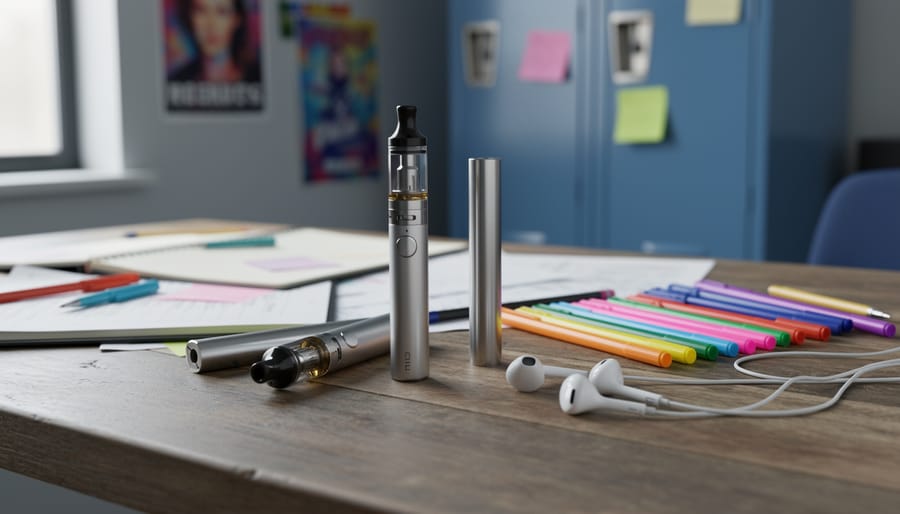
The numbers you saw in the previous section become far more meaningful when you understand the three distinct groups they represent. Not every young person who tries vaping once becomes a regular user, and the gap between those categories tells us a lot about how experimentation translates into habit.
- Experimental Use
- Refers to young people who have tried vaping at least once in their lifetime but may not currently use e-cigarettes. In Great Britain, this includes the 19% of 11-17-year-olds (about 1.1 million) who’ve tried vaping at some point.
- Current Use
- Describes young people who vape now, typically defined as use within the past 30 days in most surveys. The 6% of British 11-17-year-olds (around 370,000) who currently vape fall into this category.
- Daily Use
- Captures the most frequent users who vape every day or nearly every day. This group represents 2% of British 11-17-year-olds, approximately 140,000 young people, and signals more established patterns.
- 11-17-Year-Olds (GB Surveys)
- The standard age range used in British youth vaping research, covering secondary school ages from Year 7 through Year 13, which aligns with middle school through high school in other systems.
- Middle and High School Students (US Data)
- The age grouping used in American surveys, roughly corresponding to ages 11-18, encompassing grades 6 through 12.
What’s striking about these breakdowns is the steep drop-off between each level. For every 19 young people who’ve tried vaping, only six are current users, and just two vape daily. That ratio suggests most youth experimentation doesn’t develop into regular use, which differs from how some vaping ads or public health campaigns might frame the issue.
The age ranges used in surveys matter, too. The British 11-17 bracket captures the full secondary school experience, while US data on middle and high schoolers covers a slightly broader span. These aren’t arbitrary divisions; they reflect the school systems where most prevention work happens and where peer influence peaks. Understanding who falls into each category helps parents, educators, and the Amsterdam vaping community have more grounded conversations about actual risk levels rather than reacting to the alarming-sounding top-line statistic alone.
Why These Trends Matter: Applications and Implications
Youth vaping statistics aren’t just abstract percentages in a survey. When data shows that 19% of 11-17-year-olds in Great Britain have tried vaping, or that 6% currently use e-cigarettes, public health officials use those numbers to decide where resources go. That 370,000 current users figure tells health departments whether their prevention efforts need scaling up or whether the plateau since 2023 suggests current approaches are holding steady.
Schools and educators build their programs around these trends. A stable 2% daily use rate (about 140,000 young people) helps administrators gauge whether their classroom interventions match the scope of the issue. Parents rely on this data too: knowing that experimentation is relatively common but daily use remains low shapes how they approach conversations with their kids about vaping without creating panic or dismissiveness.
For the legitimate vaping industry, especially in places like Amsterdam where adult harm reduction sits at the core of vaping culture, these statistics matter differently. They inform product design and marketing boundaries. When EU regulations respond to youth trends with packaging restrictions or flavor policies, responsible retailers adapt to keep their adult-focused products clearly distinct from anything that might appeal to teenagers.
The Dutch perspective leans toward pragmatic harm reduction rather than outright prohibition. Youth protection and adult access coexist: the same mindset that normalizes CBD & relaxation products for wellness applies here. Understanding youth trends helps the entire ecosystem make better decisions without overreacting or ignoring the facts.
The Dutch Angle: How Amsterdam and Europe Approach Youth Vaping

The Netherlands has long taken a pragmatic stance on public health challenges, and youth vaping is no exception. While the Great Britain data shows 19% of young people aged 11-17 have tried vaping, Dutch policymakers view these trends through the lens of harm reduction rather than outright prohibition. The philosophy is straightforward: adults should have access to vaping as a less harmful alternative to smoking, but young people need protection through smart regulation and education, not moral panic.
European regulatory frameworks reflect this balance. The Tobacco Products Directive sets continent-wide standards on product safety, advertising restrictions, and age verification, creating a baseline that member states like the Netherlands build upon with local measures. The focus is on keeping vaping products out of youth hands while preserving adult access. Dutch vape shops in Amsterdam and beyond take this responsibility seriously, checking IDs rigorously and designing store environments that signal “adult product” rather than appealing to younger demographics.
The Dutch approach to youth vaping includes several key elements:
- Age-of-sale enforcement through mystery shopper programs and retailer training
- School-based education that explains nicotine risks without exaggerating or demonizing
- Community responsibility, with vape shops actively discouraging youth access
- Cultural acceptance that curiosity exists but doesn’t require criminalization
This educational emphasis matters. Dutch schools incorporate vaping into broader substance education, discussing why nicotine isn’t developmentally appropriate for young brains, what vapers need to know about responsible use, and how to think critically about social pressures. It’s less about fear and more about informed decision-making. The Amsterdam vaping community supports this, recognizing that protecting youth access to their products also protects the legitimacy of vaping as an adult harm-reduction tool.
Common Questions About Youth Vaping Trends
Is youth vaping going up or down?
In Great Britain, youth vaping has remained stable since 2023 according to ASH survey data. The trend hasn’t shown significant increases or decreases over the past few years, holding at around 6% current use among 11-17-year-olds.
How common is vaping among young people?
About 6% of young people aged 11-17 in Great Britain currently vape (roughly 370,000), while 19% have tried it at least once (approximately 1.1 million). In the United States, 5.9% of middle and high school students currently use e-cigarettes.
What age groups are included in youth vaping surveys?
The Great Britain data from ASH tracks young people aged 11-17, while U.S. surveys typically cover middle and high school students. These age ranges capture the adolescent and teen years when experimentation and social influences are strongest.
Why do some young people start vaping?
Common reasons include social curiosity, peer influence, and stress management, though motivations vary widely. Some experiment once out of curiosity, while others may use vaping devices more regularly, often influenced by what they see in their immediate social circles.
These questions come up constantly in parent forums, school board meetings, and public health discussions. The stability in the numbers since 2023 surprised some observers who expected continued growth, but it suggests that current prevention efforts and regulatory measures are holding the line rather than losing ground. The difference between experimentation (19% have tried) and regular use (6% currently vape, with just 2% doing so daily) matters because it shows that most young people who try vaping don’t become regular users.
Understanding who gets counted in these surveys helps interpret the data accurately. The 11-17 age bracket covers both middle school students just entering adolescence and older teens approaching adulthood, which is why breaking down the statistics by more specific age groups often reveals different patterns at different developmental stages.
The data paints a clear picture: roughly one in five young people in Great Britain have experimented with vaping at some point, but only 6% currently use e-cigarettes, and just 2% do so daily. That’s around 370,000 current users and 140,000 daily users among 11-17-year-olds, based on the 2026 ASH Smokefree GB Youth Survey. These numbers have held steady since 2023, suggesting we’re not seeing the explosive growth some feared. In the United States, 5.9% of middle and high school students currently vape, placing youth e-cigarette use in a similar range across different contexts.
Understanding these trends matters for everyone involved. Parents can have informed conversations without panic. Policymakers can craft sensible regulations that protect young people without undermining adult smokers who’ve switched to vaping as a harm-reduction tool. And the responsible vaping community, particularly here in Amsterdam where pragmatic harm reduction has long been part of the culture, can continue focusing on what it does best: providing quality products and honest education for adult users, while supporting efforts to keep vaping out of youth hands.
The numbers aren’t static, and monitoring will continue. But right now, we’re looking at a relatively stable situation where most young people aren’t vaping, and those who do aren’t necessarily becoming daily users. That’s a foundation for smart, measured responses rather than reactionary policies.